Showing posts with label book. Show all posts

07 May 2010

Blankity Blankity Blank

So: one of the handful of blogs I follow, my sweet old etcetera, does a fill-in-the-blank every Friday (which the blogger, the wonderful Annie Cristina, gets from a different blog with which I'm not familiar), and this week's intrigued me, seeing as it's about books.

I thought I'd share my answers:
1. My favorite book growing up was Zebra's Hiccups by David McKee. I think it might've been that my dad did the voices and fake hiccups very well.
2. The funniest book I've ever read was probably The Hitchhiker's Guide to the Galaxy, as in the first one. Maybe it's because it's more recent, but that was the first book to make me laugh so hard that I actually had to put it down in a very, very long time. Such is life for an English student, most books of "literary merit" aren't particularly uplifting.


3. The one book that truly changed my life was Les Miserables. I don't know what it was, but there was just something about that book that really struck me.

4. If you're looking for a real "tear-jerker" you should probably read... Elie Wisel's Night, perhaps? I don't know, it certainly struck me hard. I don't really go looking for tear-jerking books all that often; the works we read for class are often depressing enough.
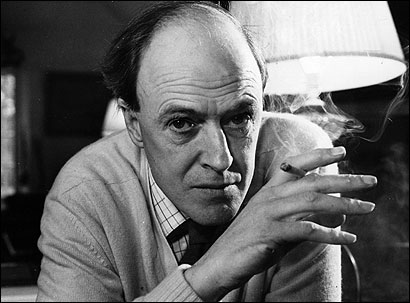

5. If I could meet any author living or dead I would want to meet either Roald Dahl or Mark Twain. Both are among my favorite authors, and I'd like to know how they wrote what they did; both just seem like interesting folks!

6. The next book on my "to read" list is a tough call. I'm deciding between 1984, Manhunt (on the Lincoln assassination), Dirk Gently's Holistic Detective Agency, and perhaps poking around some graphic novels. One thing's for sure: if I keep up with reading this summer I'll definitely be frequenting the library... well, frequently.


7. If I was snowed into remote cabin in the woods and could only choose three books to bring with me I'd bring Hamlet, The Ultimate Hitchhiker's Guide to the Galaxy, and the unabridged Les Miserables. Hamlet would be interesting to look through a few times from different angles; The Ultimate Guide because, well, how else am I going to bring all five Hitchhiker's books?? And Les Mis because I like the way Hugo writes, it just takes a long time to digest. And, at well over 1500 pages, depending on the publisher, it is long, man.

19 February 2010

The Hitchhiker's Guide: Radio vs. Print

I've recently picked up The Hitchhiker's Guide to the Galaxy again in an attempt to actually finish out the series. Now, I'm more-or-less familiar with the way the story works out, to a certain extent, mostly because I've listened to a majority of the radio series. However, with Restaurant officially finished I've crossed the threshhold from radio-based to originally-book storylines.
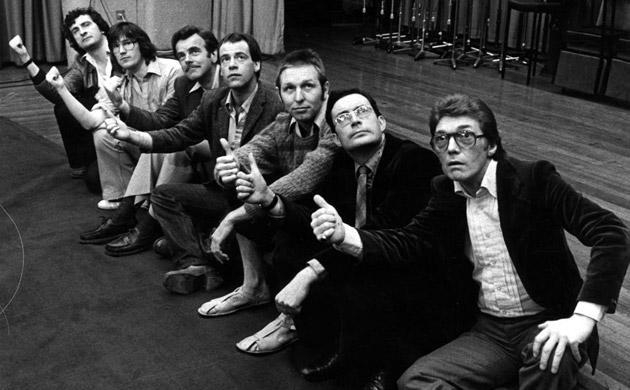
Just to add a little context, the first Hitchhiker's storyline came out through a radio series in 1978; a second season/series aired in 1980. These two together form the events found in the pages of The Hitchhiker's Guide to the Galaxy and The Restaurant at the End of the Universe. The books were released in 1979 and 1980, respectively.


In the interim between the radio broadcasts and the books' publication, Adams tweaked the storyline a bit. Admittedly I was a bit nervous when I first heard that the radio and books weren't the same in all spots. Would it be possible to keep the stories straight? Would one potentially ruin the other?


Of course, as the case usually seems to be with Adams, it all works out for the better. While I love the radio medium, and all the creative insanity it allows, the first two Hitchhiker's series got rather jumbled rather quickly. After the revelation about the mice and Earth's purpose (I'll try not to give anything away) the story gets very confusing. It's difficult to keep track of who's where and when, how people get from point A to point B, and even what's going on at points A and B, and how point C fits into everything. And, at times, it almost lacks in comprehensible detail. Something might be explained, or not, and even the explanation doesn't make sense in the whole grand scheme of the inaptly-named Trilogy in Five (now Six) Parts.


I'd like to think Adams picked up on this as well, and he had a chance to reorganize the story a little bit. He expanded and developed certain parts that were working well, reshuffled the characters to give more of a believable sequence of events, and indeed reorganized and trimmed out parts of the plot. In other words, certain parts appear only in the book, and other parts appear only in the radio series. All in all, though, they shake out and join up to meet Life, the Universe, and Everything. It's like Adams' own description of history, as spoken by Ford Prefect: "History is never altered you see, it just fits together like a jigsaw."


As far as which I prefer: honestly, both are fairly equal in merit. On the one hand, I'm a purist and wholeheartedly support a work in its original medium. I love audio, and the voices fit perfectly with the characters. I know there was a movie that came out a few years back, but as far as I'm concerned the only Arthur Dent is Simon Jones, and the only Ford Prefect is Geoffrey McGivern. (to hear both more-or-less side by side, take a listen here)


On the other hand, the books are much more detailed, especially in visual nuances that are unfortunately impossible in an audio-exclusive medium. Besides, Adams just has a way of describing things in an offbeat, deadpan, occasionally sensitive, and overall epic manner.

[Zaphod's grandfather's] two small wispy-haired heads looked so ancient that
it seemed they might hold dim memories of the birth of the galaxies
themselves.

Arthur Dent was grappling with his consciousness the way one grapples
with a lost bar of soap in the bath.


Nevertheless, like every other parking lot in the Galaxy throughout the
entire history of parking lots, this parking lot smelled predominantly of
impatience.

I mean, where else would you find that sort of thing?

Ideally, I would mix the auditory awesomeness of the characters with the detail and description of the books, but as that's not exactly possible, I'm perfectly content with giving equal merit to both and with going between the two for froody satisfaction.

24 July 2009

SoP 25-27: The Judge, Fiction, Lines

The Judge she comes in, how regal is she!
Against the blue lake & the sky, how she gleams!
She cuts 'cross water just like the knife
With her white and wood paneling, what a sight!
- - - - -
Some say they fall for characters,
The ones found 'tween the pages.
That's fine for them, but's not for me
I've thought this for 'vral ages

But friends! Aha! I wish I could
Meet some i find in books!
But one fair recent 'scovery
S'stronger than most, take a look:

Fairly calm, a right bright bloke
Often very witty
Rather 'venturesome he is,
Danger's regular-itty.

Hitching rides across the stars,
He and his bathrobed friend
T'the edge of the galaxy and back
And, indeed, universe's end.

I kind of wish I could jump in
And meet this guy, it's true,
And just hang out for a tiny spell
And 'scuss 'tell'gent shades of blue.
- - - - -
A line is a line,
Except when it isn't.
But when would that be?
We'll see

Lines can connect places
Link A with point B
Don't have to be straight,
As long a they meet.

But where do fit treelines?
Where's "A"? What's "B"?
And do they extend?
Where do they meet?

Streets, they are lines,
But where do they go?
Just 'round and 'round
Or they just stop.

A line is a line,
Except when it isn't
But when would that be?

~ ~ ~ ~ ~ ~ ~Never.
-----
Three poems in one shot. Hey, I have to catch up somehow, right?

Points for naming and/or finding the character's name in the second
poem (it's in there somewhere, I assure you).^^

17 May 2008

Thoughts While Reading "The Mysterious Benedict Society and the Perilous Journey"


I just finished reading The Mysterious Benedict Society and the Perilous Journey (though not quick enough, I think). And, as things so often do, got me thinking. What about, you ask? Well, about the characters, their motives, the little nuances, but other things as well.

This book was the sequal of the New York Times bestseller The Mysterious Benedict Society, which I personally thought was fantastic. I didn't think the author, Trenton Lee Stewart, would be able to top himself if he wrote a sequal to this book. But, as I was enveloped in the new adventure of intuitive Reynie, scholarly-but-nervous Sticky, resourceful Kate, and stubborn Constance, I realized that Stewart topped himself easily. I was rather glad that more was shown of what was going on in the minds of some of the other characters besides Reynie. I felt it developed the characters more. What's more, they were thrown into more excitement, danger, and a "higher-stakes game" than before.

I feel that the sign of a good author is the ability to not only create memorable protagonists, but to also to create memorable antagonists. Anyone who read The Mysterious Benedict Society will vividly remember Ledropetha Curtain, the man bent on global control through brainwashing and transmitting voices to people through their minds. This time, this plan seems a bit more drastic (but I will not reveal any details). For as long as I can remember, I have never understood the reason people can be so bent on world domination. With all the people in the world, it's impossible for there not to be opposition to that person's control. The person would then have to figure out how to silence this opposition without creating even more opposition. If the person was the ruler of the world, people would come to him or her with problems, expecting the person to magically make the problem better. I mean, we're all human; we can't use pixie dust to make problems go away (though that would be kind of nice). The way I see it, there's too much pressure and stress.

Then I thought of a conversation within the story, discussing how there seem to be more bad people in the world than good. Someone made the point that bad might just be more noticed or noticable than good. I felt that this was a good point. Think of what you hear on when you turn on the news on TV; fires, earthquakes, shootings, tyrany, bad, bad, bad, bad. That's all you hear; for some reason that's very sellable in mainstream journalism these days. There are people doubting the good in people, or that good even exists at all. For all some people care, "good" is just an urban legend. We need to re-remind these people that there is good in the world; there are good people working against the bad. There are more unsung heroes than maniacal villians in this world; we just need to find them.

On one of the book jacket flaps of The Mysterious Benedict Society and the Perilous Journey, Stewart had a very interesting quote on the characters in his previous book: "I wish I had Reynie's shrewdness and his gift of perception, just as I wish I could read as quick and remember as well as Sticky does, and be as acrobatic as Kate, and have a fraction of Constance's ability to say what she thinks." This got me thinking about my own writing, or most writing in general. People say that writers put themselves in their stories and everything that they write. For myself, I know I put some of my own personality to my characters, plots and choice of words. But in addition, I add things to my characters that I wish I could do or could be. For example, I'm a rather shy, relatively unadventurous person. However, most of my characters are pretty outgoing and daring. Some of the things they pull off I'd never be able to do under normal circumstances, but sometimes I wish I could do the things they do so badly. I'm not sure about other writers, but I think this idea is true for most other writers.