07 May 2010

Blankity Blankity Blank

So: one of the handful of blogs I follow, my sweet old etcetera, does a fill-in-the-blank every Friday (which the blogger, the wonderful Annie Cristina, gets from a different blog with which I'm not familiar), and this week's intrigued me, seeing as it's about books.

I thought I'd share my answers:
1. My favorite book growing up was Zebra's Hiccups by David McKee. I think it might've been that my dad did the voices and fake hiccups very well.
2. The funniest book I've ever read was probably The Hitchhiker's Guide to the Galaxy, as in the first one. Maybe it's because it's more recent, but that was the first book to make me laugh so hard that I actually had to put it down in a very, very long time. Such is life for an English student, most books of "literary merit" aren't particularly uplifting.


3. The one book that truly changed my life was Les Miserables. I don't know what it was, but there was just something about that book that really struck me.

4. If you're looking for a real "tear-jerker" you should probably read... Elie Wisel's Night, perhaps? I don't know, it certainly struck me hard. I don't really go looking for tear-jerking books all that often; the works we read for class are often depressing enough.
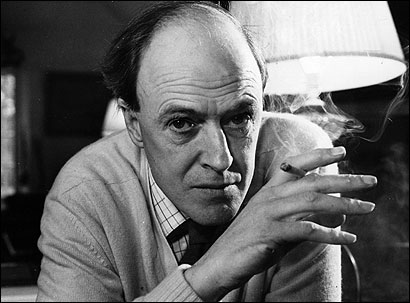

5. If I could meet any author living or dead I would want to meet either Roald Dahl or Mark Twain. Both are among my favorite authors, and I'd like to know how they wrote what they did; both just seem like interesting folks!

6. The next book on my "to read" list is a tough call. I'm deciding between 1984, Manhunt (on the Lincoln assassination), Dirk Gently's Holistic Detective Agency, and perhaps poking around some graphic novels. One thing's for sure: if I keep up with reading this summer I'll definitely be frequenting the library... well, frequently.


7. If I was snowed into remote cabin in the woods and could only choose three books to bring with me I'd bring Hamlet, The Ultimate Hitchhiker's Guide to the Galaxy, and the unabridged Les Miserables. Hamlet would be interesting to look through a few times from different angles; The Ultimate Guide because, well, how else am I going to bring all five Hitchhiker's books?? And Les Mis because I like the way Hugo writes, it just takes a long time to digest. And, at well over 1500 pages, depending on the publisher, it is long, man.

19 February 2010

The Hitchhiker's Guide: Radio vs. Print

I've recently picked up The Hitchhiker's Guide to the Galaxy again in an attempt to actually finish out the series. Now, I'm more-or-less familiar with the way the story works out, to a certain extent, mostly because I've listened to a majority of the radio series. However, with Restaurant officially finished I've crossed the threshhold from radio-based to originally-book storylines.
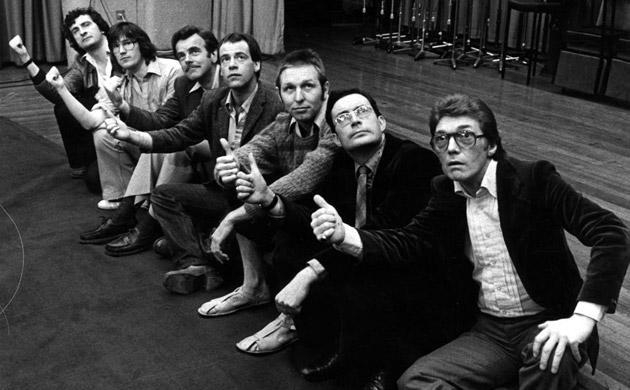
Just to add a little context, the first Hitchhiker's storyline came out through a radio series in 1978; a second season/series aired in 1980. These two together form the events found in the pages of The Hitchhiker's Guide to the Galaxy and The Restaurant at the End of the Universe. The books were released in 1979 and 1980, respectively.


In the interim between the radio broadcasts and the books' publication, Adams tweaked the storyline a bit. Admittedly I was a bit nervous when I first heard that the radio and books weren't the same in all spots. Would it be possible to keep the stories straight? Would one potentially ruin the other?


Of course, as the case usually seems to be with Adams, it all works out for the better. While I love the radio medium, and all the creative insanity it allows, the first two Hitchhiker's series got rather jumbled rather quickly. After the revelation about the mice and Earth's purpose (I'll try not to give anything away) the story gets very confusing. It's difficult to keep track of who's where and when, how people get from point A to point B, and even what's going on at points A and B, and how point C fits into everything. And, at times, it almost lacks in comprehensible detail. Something might be explained, or not, and even the explanation doesn't make sense in the whole grand scheme of the inaptly-named Trilogy in Five (now Six) Parts.


I'd like to think Adams picked up on this as well, and he had a chance to reorganize the story a little bit. He expanded and developed certain parts that were working well, reshuffled the characters to give more of a believable sequence of events, and indeed reorganized and trimmed out parts of the plot. In other words, certain parts appear only in the book, and other parts appear only in the radio series. All in all, though, they shake out and join up to meet Life, the Universe, and Everything. It's like Adams' own description of history, as spoken by Ford Prefect: "History is never altered you see, it just fits together like a jigsaw."


As far as which I prefer: honestly, both are fairly equal in merit. On the one hand, I'm a purist and wholeheartedly support a work in its original medium. I love audio, and the voices fit perfectly with the characters. I know there was a movie that came out a few years back, but as far as I'm concerned the only Arthur Dent is Simon Jones, and the only Ford Prefect is Geoffrey McGivern. (to hear both more-or-less side by side, take a listen here)


On the other hand, the books are much more detailed, especially in visual nuances that are unfortunately impossible in an audio-exclusive medium. Besides, Adams just has a way of describing things in an offbeat, deadpan, occasionally sensitive, and overall epic manner.

[Zaphod's grandfather's] two small wispy-haired heads looked so ancient that
it seemed they might hold dim memories of the birth of the galaxies
themselves.

Arthur Dent was grappling with his consciousness the way one grapples
with a lost bar of soap in the bath.


Nevertheless, like every other parking lot in the Galaxy throughout the
entire history of parking lots, this parking lot smelled predominantly of
impatience.

I mean, where else would you find that sort of thing?

Ideally, I would mix the auditory awesomeness of the characters with the detail and description of the books, but as that's not exactly possible, I'm perfectly content with giving equal merit to both and with going between the two for froody satisfaction.

26 January 2010

"It is said in death..."

The first part of this was my response to a Daily Writing prompt: take the first line of a book, any book, and use it as the first line of some writing. The second part (starting with "It's an odd sensation...") I wrote out of boredom.

It is said that in death, all things become clear...

Who said that? Somebody dead?

Listen, death is very confusing. It sees no need to tear away the veil of ignorance as you take your last breaths, especially if someone else introduced you to death.

As I lay there, gasping my last, nothing but questions raced through my mind. What had I done to deserve this fate? Why such cruelty?

And when I did die, how would I be able to make that sucker pay for staining the neckline of my new dress?

It's an odd sensation, looking at your dead self. So-called out-of-body experiences have nothing on this. At first it was a bit confusing to grasp: Wait, so, that's me there... but wait, aren't I here? Like, here, here? That's supposed to be there, but that can't possibly be me, I'm... right... here... right?

I spun in circles with that one for quite some time until I finally convinced myself that I was me, and that body that looked like me was just coincidentally similar in features. I was where my thinking was, I told myself, and usually dead bodies can't think for themselves.

That partial detachment made it a bit easier to give in to my curiosity and examine my dead self. The pale face didn't hold too much expression, but the mouth was drawn in a little with worry, and the brow was still wrinkled in concern. I was thankful I didn't die with my eyes open, that would've royally freaked me out. For some reason I'd often been complimented on my neck; apparently there was something regal about it. I half-chuckled spitefully, "Nothing regal about a sliced-open neck, I can say that much." It turned my stomach to look at it, but my curiosity got the better of me: my assailant had taken a few surprisingly deep hacks at my trachea. Below these awfully raw incisions, which I'd decided were as precise as incisions executed by a drunk surgeon on a pogo stick with a rusty machete, now-dried blood laced what had been my collar bone and seeped into the neckline of the dress I was wearing.

And to think, I realized, I'd been trying to pick out a necklace before I died.

03 January 2010

Dystopian Barbershop

[to be done in a lively barbershop style. Regular text is the lead voice, anything in parentheses is the other three voices. All rhythm and harmony under the lead is done in typical barbershop "bops", "oohs", and "ahhs". Finger snaps are optional.]

A new world order's taken hold
(ooh, new order's taken hold)
Promised all they had hearts of gold
(bah bah, heart of gold!)

Took a little walk down the gov'ner's street,
And they took the power in a coup so neat.
Assured us all it was gonna be fine,
But then sent all our liberties to the bread line
(That bread, bread line!)

Made some big changes to the way we live
(Every night at eight they lock us in)
Everything is watched, that's no way to live.
(Oh no, no way to live)

Music ain't free, they say it just won't do,
So if they found us out, then we'd be through.
No more barbershop, ain't that a shame?
We got this dystopia to blame.
(Dystopian government we have to blame)

Waitin' and lookin', tryin' us to find,
(we're in hiding, trying us to find)
But just thus far to us they're blind
(Just like bats, they're just so blind).

We're hoping we can shake'm, keep ourselves alive
(Livin' and breathing, keep ourselves alive)
And keep the barbershop tradition buzzin in the hive
(Buzzin like bees, keepin' tradition alive)

- - - - - -


I asked for a random prompt, the supplier gave me "dystopian barber shop." I interpreted it to be "barbershop" as in the kind of quartet; this one was a thinker, lemme tell you.
I think this stands as proof as to why I shouldn't write "late" at night.

12 December 2009

Random Apostrophic Letters from the Pianist

A take off of a semi-feature on Robyn's blog...
- - - - -
Dear Connor,
It's been a while, I know. I want to continue your story, but you've been out of my head for a while. Please, will you come back? I really do miss you. You and this story of yours has been too enjoyable for you to stay out much longer. If you need a break, I understand, but can you at least assure me you'll come back sometime in the foreseeable future?
Missing you,
~g2

A telegram addressed to My Living Quarters:
Enough is enough. Stop. Upon my return this evening prepare for an intense excavation. Stop. Although I will be exhausted from my piano lesson no mercy will be shown. Stop.

You have been warned. Stop.

Querida amiga,
He pensado mucho en tí recientamente. Mientras sienta un poquitin raro en una parte de mi mente que estás con alguien, estoy alegre para tí. El es inteligente, maduro, y fuerte y franco en sus opiniones, y son buenas calidades, pienso. Las fallas solas que puedo encontrar en él: lleva casi demaciado negro, y a veces habla entre dientes. Pero, no son detalles enormes, creo. Espero que cosas pasen bien para ustedes. De todos modos digo que has escogido bien.
Siempre aquí,
~g2
PS: Yay for chances to use subjunctive! ^^


My dearest Oliver,
Thank you so much for helping me prepare everything: the competition a few weeks ago, my audition yesterday, and the other auditions to come. I'll certainly miss you next year, but I'll be close enough that I can come home to you easily.
Between you and The Piano Teacher I can't thank you enough. You two have been all too good to me.
Much love,
~g2

To: Gen. Nonsense
First, I've some disappointing news to report. I've done some digging, and I believe that majors are indeed higher than captains. I admit that it's a bit disheartening to think that Disaster, Third, and especially Distraction are all ahead of me... and to think! I'm the oldest in the rank! Ah well, it is what it is.
Second, as far as chronicling our group goes: I was thinking we could describe the members and then decide on various episodic adventures. We can brainstorm, yes?
Third: bink.
~Cpt. Obvious

Paulito & Nikki,
I just wanted to thank you guys for being such hoopy writing friends, and indeed hoopy friends in general. Distance may separate us three, but that has yet to be a real deterrent. I've missed talking with you two as of late, but I hope fate decides to allow our paths to cross again very, very soon.
Not panicking,
~g2

07 December 2009

On Criticism

I'm not usually one for rants, but with a competition in the not-too-distant past and my college auditions starting up this week (!!!) the subject's been on my mind, asking to be ranted about a bit. And that has been the subject of criticism.

Yes, almost everybody cringes at the word and others in its family (criticize, critic, critique, etc), but I'm pretty well used to it. I have to be, the arts and music especially are subject to such scrutiny.
Whatever the definition, I frankly don't mind it; for the most part it's advice that will help me improve my work, presented in a fairly nurturing way that doesn't label rough spots as FAILURES but as things to work on. Not only that, but more often than not the criticism is given by either a peer or someone who is more experienced than I in a particular area, usually the piano.
Two particular things bother me about criticism, though. Of course there would be something that bothered me about it, otherwise this wouldn't be a particularly good rant.
The first is its negative connotation. According to our good friend N. Webster, the first definition of "criticize" runs as follows:

"crit-i-cize: verb, 1: to consider the merits and demerits of and judge accordingly, evaluate."


I think negative association in the media is to blame for this one. People often times are afraid of having their mistakes pointed out to them, myself included. Folks are also hesitant to point out mistakes to others, for fear of offending them somehow with the criticism. Criticism, while it does point out faults, does not mean that just because one bit needs some work the whole thing is a disaster. It's okay to both be criticized and to criticize...

...to an extent.
I'm hesitant with this because of the other bothersome point. Usually to properly evaluate/critique something, the critic needs equal, comparable, or greater experience in the evaluated field, preferably one of the latter two. Experience gives a critique merit; I'm more likely to give the comments of a piano conservatory professor a little more consideration than the comments of, say, a passing counter clerk with little classical music background. However, some people just slash through others' work without much experience in that particular work.

I automatically think back to our school's talent showcase last year on this subject. After I played, I scooted into the auditorium to see the rest of the acts with a handful of friends. Immediately behind us, however, was somebody who sounded like he was trained by Simon Cowell himself. From the time I sat down to the end of the show, I don't think The Critic had a single positive thing to say about any of the acts. I'm not saying The Critic didn't say anything positive; if TC did say something positive I didn't hear it.


What particularly irked me about this Critic was the tone, the tone of assumed omniscience. Most of the acts were musical groups, and while there's a large musical population in our school, I don't think this particular Critic is among that population. The trouble is, TC commented as if drawing inspiration from some Exhaustive Encyclopaedia of Musical Perfection. Just the condescending tone made me want to whip around and hiss, "then let's see you get up on stage and perform the song that you wrote in front of 70-some-odd people." Unless this person is some kind of closet prodigy with an infinite wealth of knowledge in music composition and performance, because of a lack of experience I honestly don't think The Critic had any right to assume this know-it-all role. It's fine to say why you like or don't like a particular work, but trying to sound like an authority just doesn't cut it.
The right to criticize authoritatively falls under the same rules as bragging rights, in my book: if you can't match it, top it, or offer any advice to improve it, you've no real right to criticize it.

07 November 2009

The Traveler Returns

Howdy all! I just got back from my insanely amazing trip 'round Europe, complete with pictures, commentary, temporal confusion (my body thinks it's three in the morning, but my brain hasn't a zarkin' clue as to location yet, much less time), a touch of aircraft-induced-dizziness (it got bumpy around Greenland), but a great sense of satisfaction.
Will I let you all in on what went down across the pond? Of course! That's what I promised, isn't it? However, all y'all are going to have to hang in some suspence for a while; I still have schoolwork and serious piano catch-up to contend with, as well as actually typing up the aforementioned commentary and loading in the previously-alluded-to pictures. These things take time, you know!
However, I will do my best to deliver as soon as I can!